Financing Available:
| Heat Source | GHV 12 — Indirect Gas-Fired Burner |
| Burner Output | 1,200,000 Btu/hr |
| Rack Capacity | 30 Racks |
| Tray Capacity | 600 Trays |
| Product Load | 3,000–6,000 lbs of wet product per batch |
| Drying Temperature | 80°–220° F (26°–104° C) |
| Circulating Fans | One 30 HP Plug Fan |
| Airflow Control | Adjustable airspeed with reversible flow direction |
| Vents | Two 30" × 30" — (1) Intake & (1) Exhaust |
| Loading Space (D × L × H) | 24'10" D × 5'7" L × 6'0" H |
| Footprint (D × L × H) | 34'0" D × 6'3" L × 11'0" H |
| Power Options | 480V Three Phase, 50 Hz 480V Three Phase, 60 Hz |
| Fuel Type | Natural Gas or Propane |
| Controller | Advanced touch-screen controller with remote monitoring capability |
| Construction | Food-grade design and construction — NSF certified |
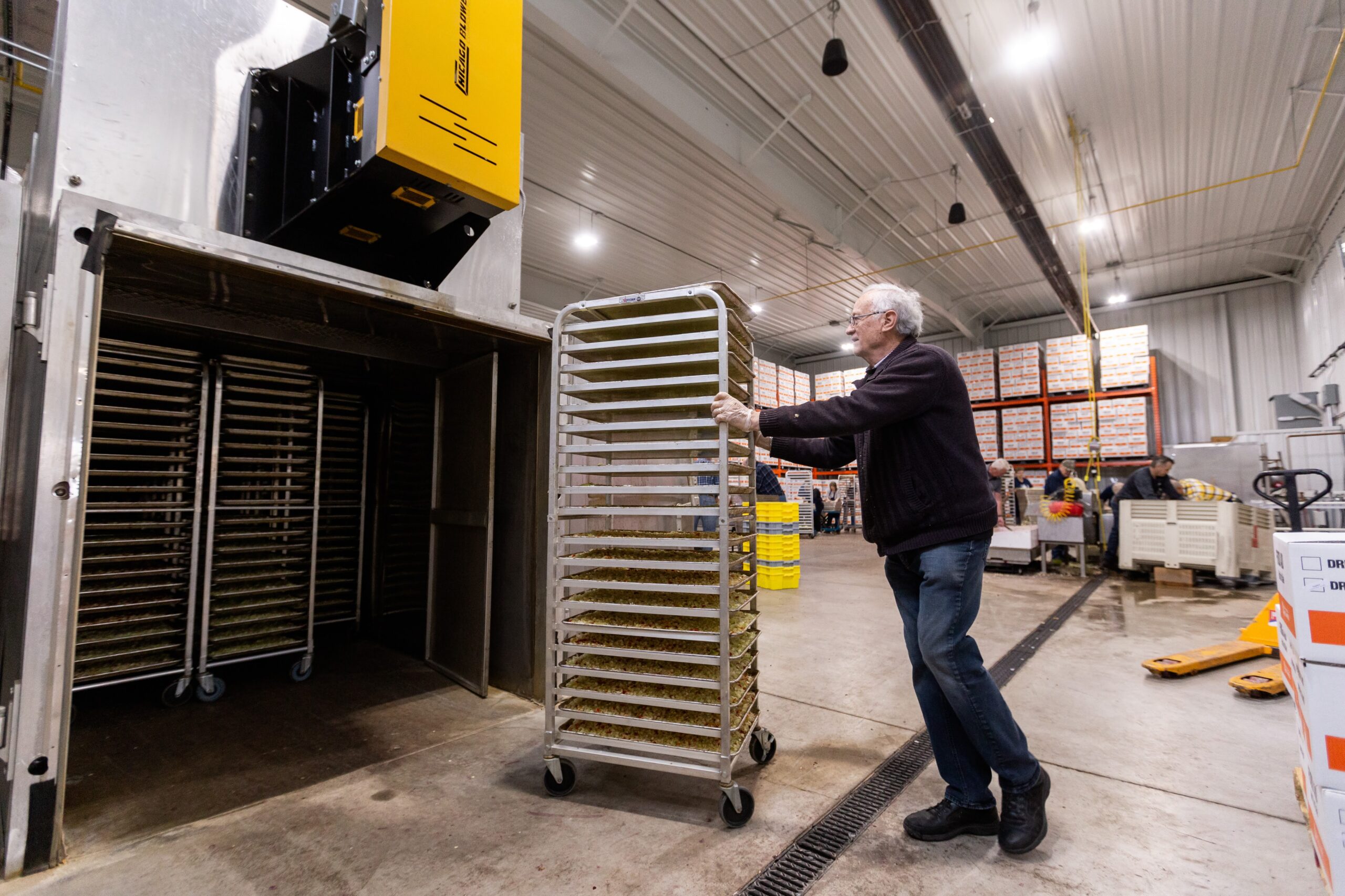
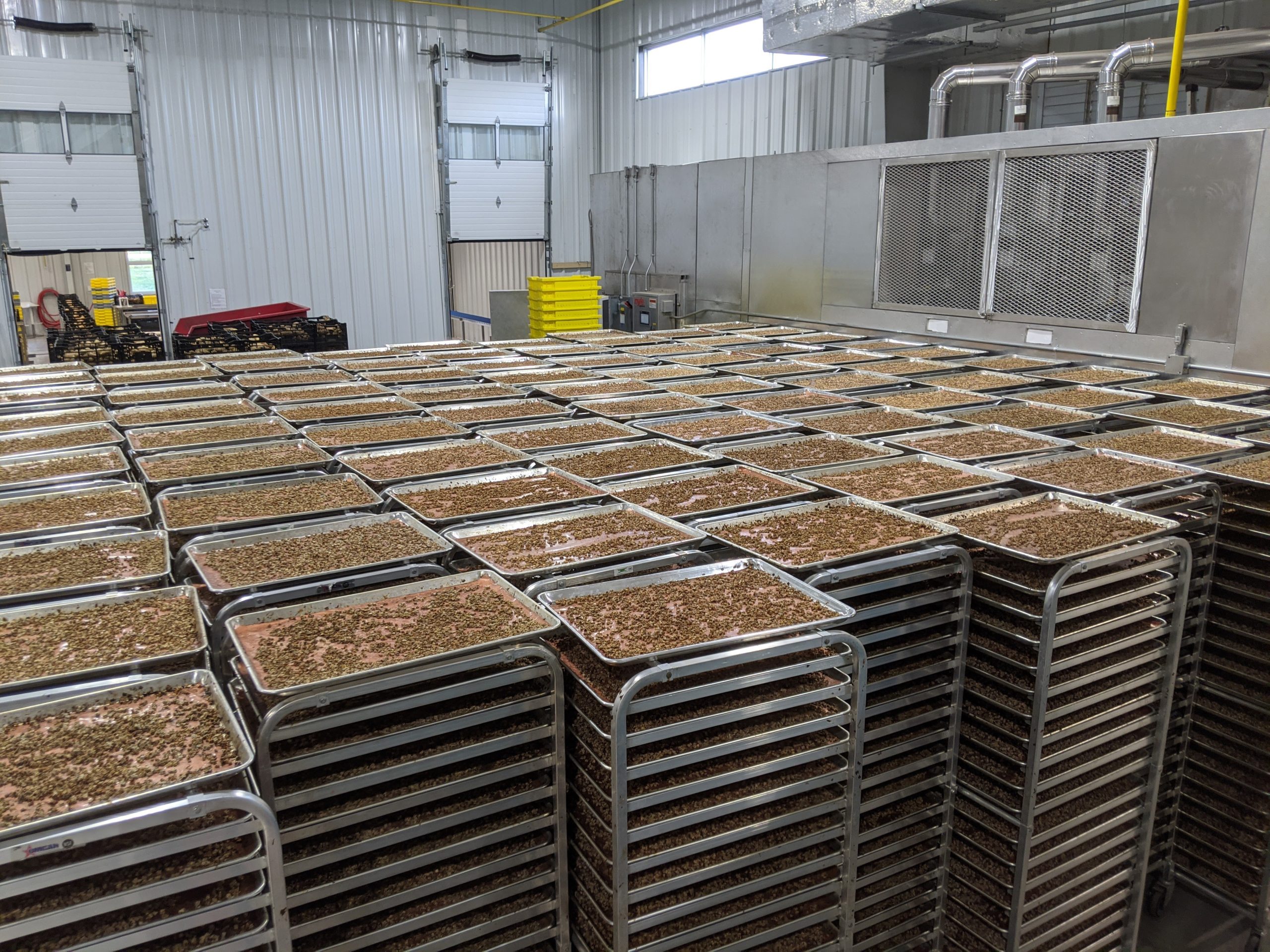
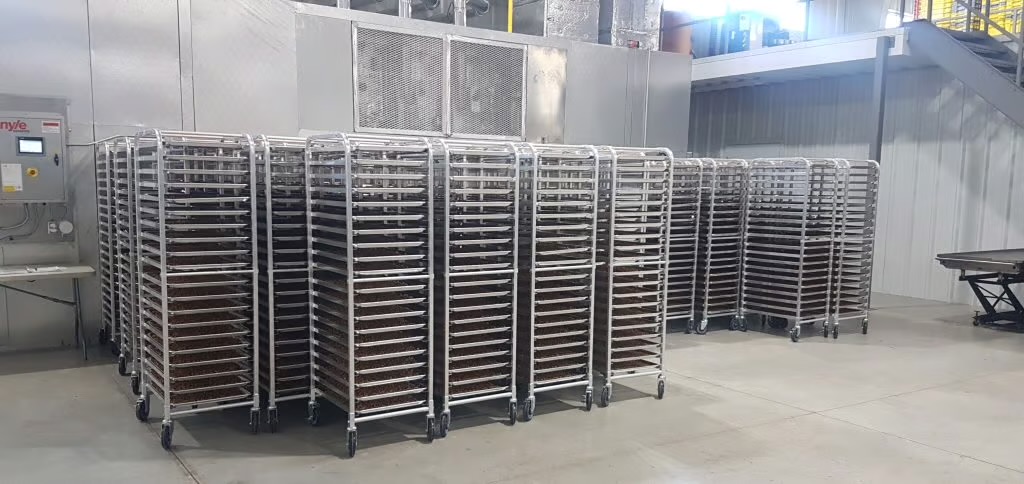
The FDG1000 is Nyle's gas-fired dehydrator in the FDG Series, offering significantly larger chamber size and heat output. Where the FDG600 holds 18 racks and 360 trays with an 800,000 Btu/hr burner, the FDG1000 holds 30 racks and 600 trays powered by a GHV 12 burner at 1,200,000 Btu/hr, 50% more heat output for a chamber that handles two-thirds more product. Batch loads range from 3,000 to 6,000 pounds of wet product per run, compared to 1,800 to 3,600 on the FDG600. Both systems share the same 80°–220°F temperature range, reversible fan design, control platform, and scheduling capabilities.
The FDG1000 is built for the highest-throughput commercial and industrial food processing environments; high-volume meat and jerky operations, industrial herb and spice processors, and any facility where maximizing batch size and minimizing cycle-to-cycle downtime is a primary operational priority. If your production volume has outgrown a smaller-tray system, or if you're building out a new facility designed around peak throughput from day one, the FDG1000 is the appropriate scale.
Yes. Like the FDG600, the FDG1000 includes a Validation step mode in its scheduler that holds both chamber temperature and relative humidity at operator-defined setpoints for a specified time duration before advancing. With a 220°F temperature ceiling, it can execute kill-step protocols at temperatures that heat pump systems cannot reach, making it appropriate for products governed by USDA processing requirements or facilities operating under a validated HACCP plan that specifies high-temperature thermal processing.
Yes. The FDG1000 runs the same touch-screen control platform and scheduling software as the rest of the FDG Series. Operators get up to 10 programmable schedule steps with Time, Temp, RH, and Validation step modes; per-step fan speed and vent position control; real-time readings from four temperature and humidity probes; data logging at one-minute intervals accessible through a web browser; and remote monitoring and control via VNC client. Schedules can be saved to the SD card and reloaded by name for repeat product runs.
The FDG1000 requires 480V three-phase electrical service (available in 50 Hz or 60 Hz), a natural gas or propane supply line sized for 1,200,000 Btu/hr input, and adequate floor space for the unit's 34'0" × 6'3" footprint with additional clearance for door swing, airflow, and service access. An appropriate vent stack connection is required for the furnace exhaust. Nyle's team provides detailed pre-installation requirements and handles expert commissioning to ensure the system is fully operational before handoff.
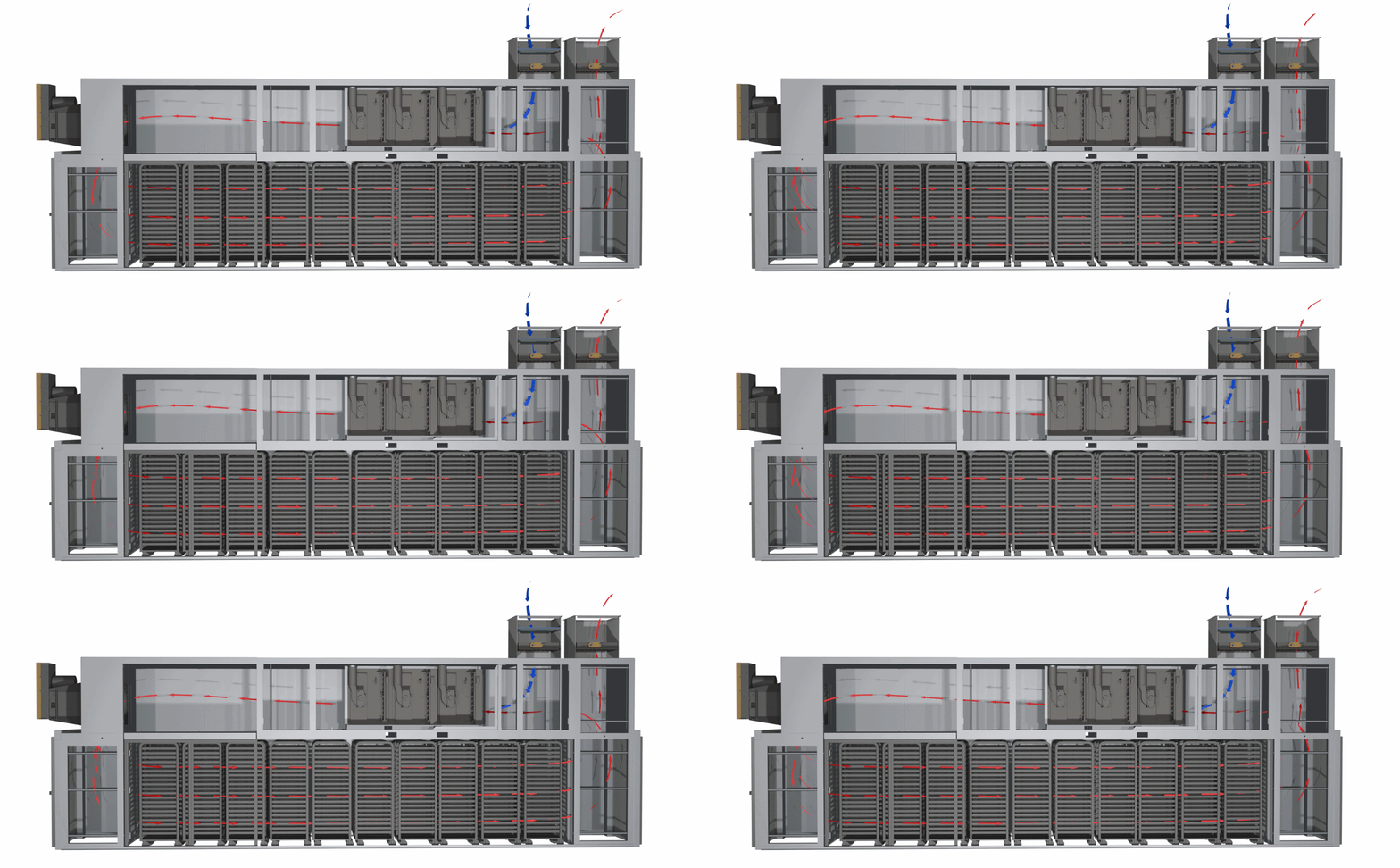
The FDG1000 uses a closed-loop, indirect gas-fired heating system to efficiently dry product while keeping combustion gases completely separate from the drying airstream, making it ideal for all food applications.
Fresh air is drawn into the heat exchanger modules at the top of the unit, where it's heated by a gas-fired burner without ever coming into direct contact with the flame or combustion byproducts. This heated air then travels through the upper plenum from right to left across the length of the machine, ensuring a consistent, even temperature before it reaches the product.
From there, the hot air is directed down and through the lower drying chamber, flowing horizontally through the racks and trays and absorbing moisture from the product as it passes. Moist exhaust air is then pushed upward and out on the right side of the unit, while the 30 HP recirculation fan on the far left drives the entire loop, recovering heat and maximizing energy efficiency throughout the process.